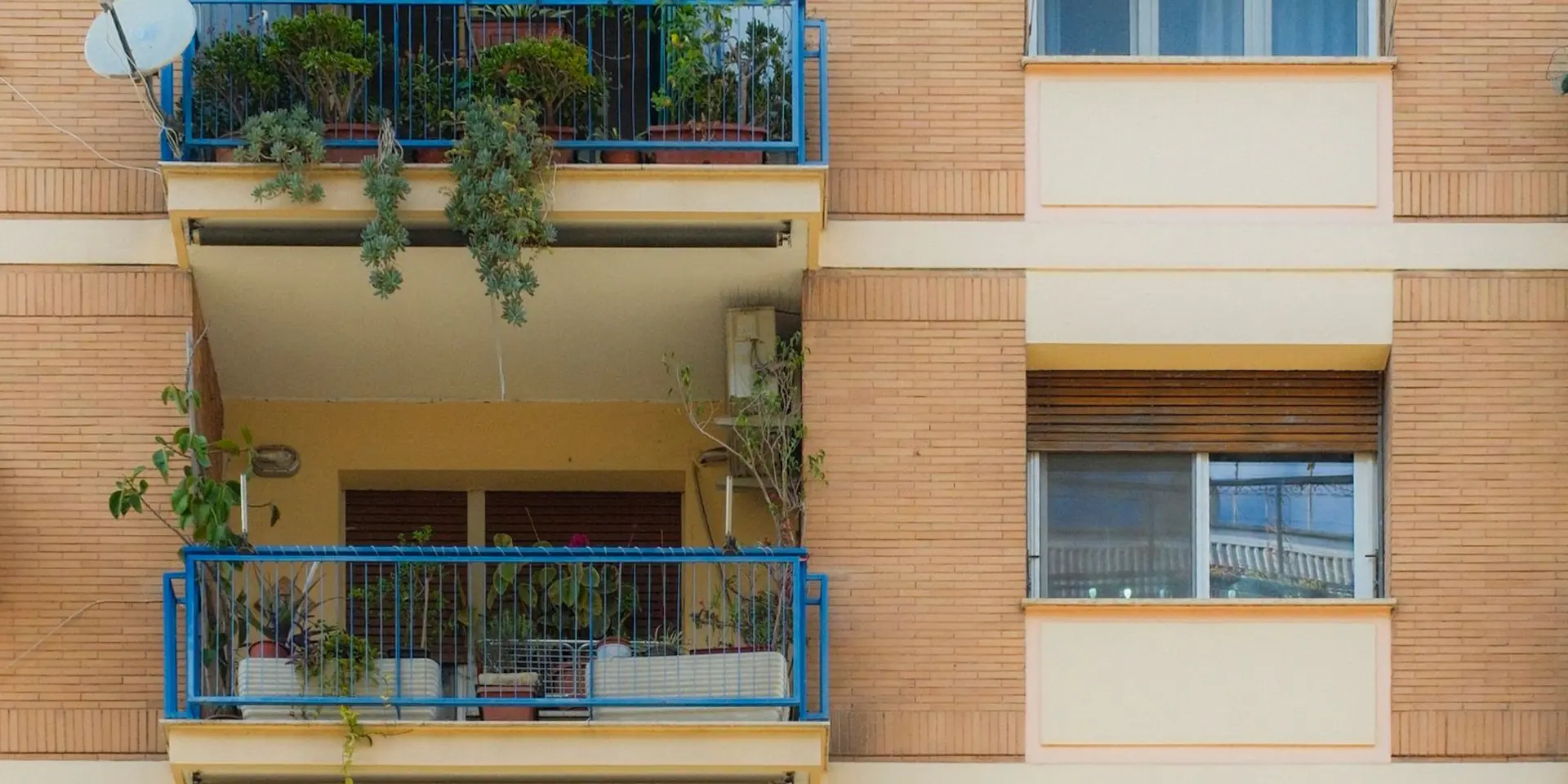


Many buildings in Spain are still standing thanks to a legalisation permit. They were built without a planning permission, or exceeded the limits set by the permission; the local council launched an investigation and, as the development complied with the town plan, ended up legalising it. Until now, it was taken for granted that this legalisation certificate was equivalent to a standard planning permission in every respect, including the right to claim compensation from the local council if a judge were to overturn it and the building had to be demolished. The Supreme Court has just ruled that this is not the case.
Judgment 1010/2026, dated 14 September, establishes this principle: when a legalisation licence is revoked, the local council is not required to pay compensation for the part of the building work carried out without a licence, even if it was subsequently legalised. Whoever built without a permit is responsible for the demolition, and the fact that the local council later granted legalisation does not alter this.
The case comes from Castrillón, in Asturias. A homeowner obtained planning permission to renovate and extend her property, carried out two further alterations without applying for permission, the local council legalised these in 2012, and eventually the courts annulled all the permissions – both the initial one and the legalisation. The house was demolished in 2020. The local court and the High Court of Justice ordered the local council to pay nearly one million euros for the entire project, on the usual grounds: legalisation is an act by the local council itself which confers rights and creates legitimate expectations in the recipient, just like any planning permission.
The Supreme Court does not dispute that, from a town-planning perspective, a regularisation licence and a prior licence are equivalent. What it states is that, in order to claim compensation, something further is required: that the building work was carried out because a licence existed. When someone builds without a permit, there is no licence on which they could have relied. Legalisation takes place once the building work has already been completed and, therefore, could not have been the reason for it being carried out in the first place. The Court adds that the normal consequence of building without a permit is demolition, and that subsequent legalisation does not exempt the owner from facing that consequence if the legalisation application is unsuccessful.
It is not an entirely new idea. The Court itself points out that, back in 2006, it had already refused to award compensation to a claimant whose building had been demolished because it had been constructed without a planning permission, although in that case there was no evidence that it had subsequently been regularised. What is new is that it is now ruling on a case where regularisation did take place, and concludes that this subsequent authorisation does not alter the outcome.
This situation should not be confused with that of the declaration of responsibility, which is the procedure under which most building works and activities are now commenced. With the declaration of responsibility, the developer knows from the outset that they are acting on their own responsibility and that the local authority only carries out checks afterwards. If anything goes wrong, the law holds the developer liable, to the extent that the local authority – which is liable to third parties acting in good faith for failing to act in time – may pass on the cost to the developer. No one expects to be compensated by the local authority simply because a declaration of responsibility proves ineffective. The legalisation licence, on the other hand, is an explicit act whereby the local council inspects the works and declares them compliant, which is why the licence holder felt protected. What the Supreme Court clarifies is that this protection extends to maintaining the works whilst the title remains valid, but does not transfer to the local council the risk that it might not remain valid. On this point, legalisation and the declaration of responsibility end up in the same place.
What this means in practice is simple to explain but less comfortable to accept. A developer who carries out a modification without obtaining the necessary authorisation, relying on the fact that it will be legalised once the works are complete, must be aware that if that legalisation is challenged and overturned, the cost of demolition will be borne by them and they will not be able to seek recourse against the local council. A buyer or bank examining a property whose planning status depends on such legalisation must ask whether that title has been challenged or is liable to be challenged, because the compensation that previously served as a safety net no longer exists for the part of the building constructed without a licence. And local councils, which are usually represented by their insurers in such legal proceedings, now have a solid argument for reducing the amounts they are ordered to pay.
The ruling leaves the door open by referring to ‘exceptional circumstances’ that could alter the rule, without specifying what these are. This is where the debate will centre in the coming years, most likely revolving around cases where legalisation was based on a change to the town planning regulations initiated by the local council itself, or where the owner had serious grounds for believing that the building works could be legalised. However, the general rule has now been established and should be factored into any risk assessment based on legalisation.
Article published in Confilegal