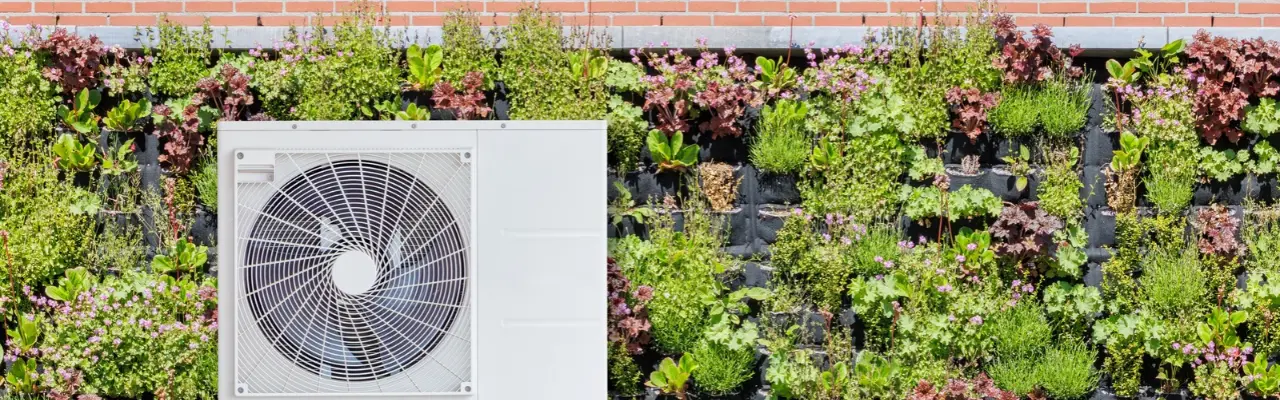
The Dutch government aims for homes and buildings to use sustainable energy for heating, with the goal of achieving gas-free living by 2050. One way of achieving this is through the development of collective heating networks (district heating), which provide heat to entire neighbourhoods. However, this is not feasible everywhere. The coalition agreement therefore provides that, in areas where a heating network is not the most suitable solution, a smart hybrid heat pump will, in many cases, become the new standard from 2029 when a central heating boiler is replaced.
With this measure, which will be incorporated into the Dutch Buildings (Living Environment) Decree (Besluit bouwwerken leefomgeving, Bbl), the government aims to reduce gas consumption and energy costs, further improve the sustainability of Dutch homes and comply with the European Energy Performance of Buildings Directive (EPBD). The plans still require approval by both houses of the Dutch Parliament.
What will change from 2029?
If all of the government’s plans are adopted in their current form, the combination of a smart hybrid heat pump and a central heating boiler will become the new standard when an existing central heating boiler reaches the end of its useful life and needs to be replaced. The heat pump works in combination with a central heating boiler and can significantly reduce natural gas consumption without requiring a home to become completely gas-free immediately.
Depending on the property and the technical possibilities, a fully electric heat pump may also be a suitable solution. This type of heat pump heats the property without a central heating boiler and can also provide domestic hot water. This makes it possible for the property to become completely independent of natural gas.
Why is the government opting for hybrid heat pumps?
For a large proportion of homes and buildings, a (hybrid) heat pump is already one of the most efficient ways to improve sustainability. A hybrid heat pump works in combination with a central heating boiler and can reduce natural gas consumption for heating by approximately 65% on average. This can result in lower energy bills and reduce a property's CO2 emissions by more than 30%.
The new standard also represents an intermediate step towards gas-free living by 2050. It gives property owners the opportunity to make their properties more sustainable gradually, for example by improving insulation. In the longer term, this can facilitate the transition to completely gas-free living.
What is a smart heat pump?
From 2029, newly installed hybrid heat pumps will also be required to have smart functionality. Smart heat pumps can adjust their operation to times when there is less demand on the electricity grid or when electricity prices are lower. This can contribute to more efficient energy use and lower energy costs.
The technical requirements that a smart heat pump must meet are set out in the Dutch Technical Agreement (Nederlandse Technische Afspraak, NTA) 8171.
Which properties will be exempt?
For certain homes and buildings, applying the standard for hybrid heat pumps may not be desirable or feasible by 2029. The government is working on exemptions for these situations. These include:
- homes that are due to be connected to a heating network in the near future;
- apartment buildings. Installing a (hybrid) heat pump is not always possible in these buildings due to limited space, potential noise nuisance or a less favourable balance between the required investment and energy consumption;
- listed buildings. Alterations to protected listed buildings may require a permit. If such a permit is not granted, installing a heat pump may not be possible.
The precise conditions and exemptions will be developed further in the coming years. This means that not every apartment or listed building will automatically be exempt.
Costs and subsidies
Purchasing and installing a hybrid heat pump involves higher costs than replacing a traditional central heating boiler. The total indicative cost of a hybrid heat pump, including installation, is approximately €8,000, compared with approximately €2,000 for a new central heating boiler. The actual costs depend on the type of installation and the specific circumstances of the building.
Financial support for the purchase of a heat pump is available through various subsidy schemes. Business users who occupy their own building may, subject to certain conditions, qualify for the Sustainable Energy and Energy Savings Investment Subsidy (Investeringssubsidie duurzame energie en energiebesparing, ISDE). For private and commercial landlords, the Subsidy Scheme for the Sustainability and Maintenance of Rental Properties (Subsidieregeling Verduurzaming en Onderhoud Huurwoningen, SVOH) may offer funding opportunities. The applicable conditions and subsidy amounts vary depending on the scheme.
Is a hybrid heat pump already mandatory in 2026?
No. The announced standard is intended to be introduced in 2029, and its precise details will be developed further over the coming years. Based on the announced measure, there is currently no general obligation in 2026 to install a hybrid heat pump when replacing a central heating boiler.
Although a hybrid heat pump is not yet mandatory, landlords would be well advised, in the event of a malfunction or failure of an existing central heating boiler, to investigate the various options for replacement and improving the sustainability of the property, also taking into account the potential positive impact on its energy label.
Given the lead times involved in construction and redevelopment projects, project developers and redevelopers are advised to anticipate the expected new standards and take them into account when developing their plans.