'%20stroke-width='15'%20stroke-linecap='round'%20stroke-dasharray='0%2044%200%2044%200%2044%200%2044%200%20360'%20cx='100'%20cy='100'%20r='70'%20transform-origin='center'%3e%3canimateTransform%20type='rotate'%20attributeName='transform'%20calcMode='discrete'%20dur='2'%20values='360;324;288;252;216;180;144;108;72;36'%20repeatCount='indefinite'%3e%3c/animateTransform%3e%3c/circle%3e%3c/svg%3e%20--%3e%3csvg%20width='78'%20height='78'%20viewBox='0%200%2078%2078'%20fill='none'%20xmlns='http://www.w3.org/2000/svg'%3e%3crect%20x='14'%20y='17'%20width='48'%20height='44'%20fill='white'%20/%3e%3cpath%20d='M24.0741%2034.9365C21.432%2034.9365%2019.377%2037.0503%2019.377%2039.7365C19.377%2042.4228%2021.4466%2044.5512%2024.0741%2044.5512C26.7016%2044.5512%2028.7714%2042.4375%2028.7714%2039.7365C28.7714%2037.0356%2026.7016%2034.9365%2024.0741%2034.9365Z'%20fill='%235082AF'%20/%3e%3cpath%20d='M38.5614%200C17.2624%200%200%2017.2624%200%2038.5616C0%2059.8606%2017.2624%2077.123%2038.5614%2077.123C59.8606%2077.123%2077.123%2059.8606%2077.123%2038.5616C77.123%2017.2624%2059.8606%200%2038.5614%200ZM32.1469%2047.5597H28.7707V46.0624L28.6533%2046.1651C27.2734%2047.2661%2025.644%2047.8386%2023.8093%2047.8386C19.3469%2047.8386%2015.9853%2044.3597%2015.9853%2039.7506C15.9853%2035.1413%2019.3469%2031.6624%2023.8093%2031.6624C25.5853%2031.6624%2027.2734%2032.2349%2028.6533%2033.3358L28.7707%2033.4238V31.9267H32.1469V47.5597ZM43.0238%2044.5506C44.7707%2044.5506%2046.3413%2043.611%2047.1486%2042.0992H50.7891C49.7616%2045.5781%2046.723%2047.824%2043.0238%2047.824C38.4147%2047.824%2034.9358%2044.345%2034.9358%2039.7358C34.9358%2035.1267%2038.4147%2031.6477%2043.0238%2031.6477C46.7083%2031.6477%2049.7469%2033.8936%2050.7891%2037.3872H47.1634C46.356%2035.8459%2044.8147%2034.9211%2043.0093%2034.9211C40.367%2034.9211%2038.312%2037.0349%2038.312%2039.7358C38.312%2042.4368%2040.3818%2044.5506%2043.0093%2044.5506H43.0238ZM60.213%2035.2H56.9835V42.7157C56.9835%2043.5963%2057.6882%2044.2862%2058.5835%2044.2862H60.213V47.5597H58.5835C55.7506%2047.5597%2053.6074%2045.4754%2053.6074%2042.7157V29.2992H56.9835V31.9267H60.213V35.2Z'%20fill='%235082AF'%20/%3e%3c/svg%3e)

'%3e%3cg%20clip-path='url(%23clip1_1891_1163)'%3e%3crect%20width='22'%20height='16'%20rx='2'%20fill='white'/%3e%3cpath%20fill-rule='evenodd'%20clip-rule='evenodd'%20d='M0%2011H23V16H0V11Z'%20fill='%23477050'/%3e%3cpath%20fill-rule='evenodd'%20clip-rule='evenodd'%20d='M0%200H23V5H0V0Z'%20fill='%23CE2939'/%3e%3c/g%3e%3c/g%3e%3cdefs%3e%3cclipPath%20id='clip0_1891_1163'%3e%3crect%20width='22'%20height='16'%20fill='white'/%3e%3c/clipPath%3e%3cclipPath%20id='clip1_1891_1163'%3e%3crect%20width='22'%20height='16'%20rx='2'%20fill='white'/%3e%3c/clipPath%3e%3c/defs%3e%3c/svg%3e)


These days, international news is being written in tariffs, warships, and regional crises. What is happening is neither an academic debate nor a forward-looking analysis: it is a present that is already raising the cost of our imports, affecting our exports, and redrawing the rules of global trade.
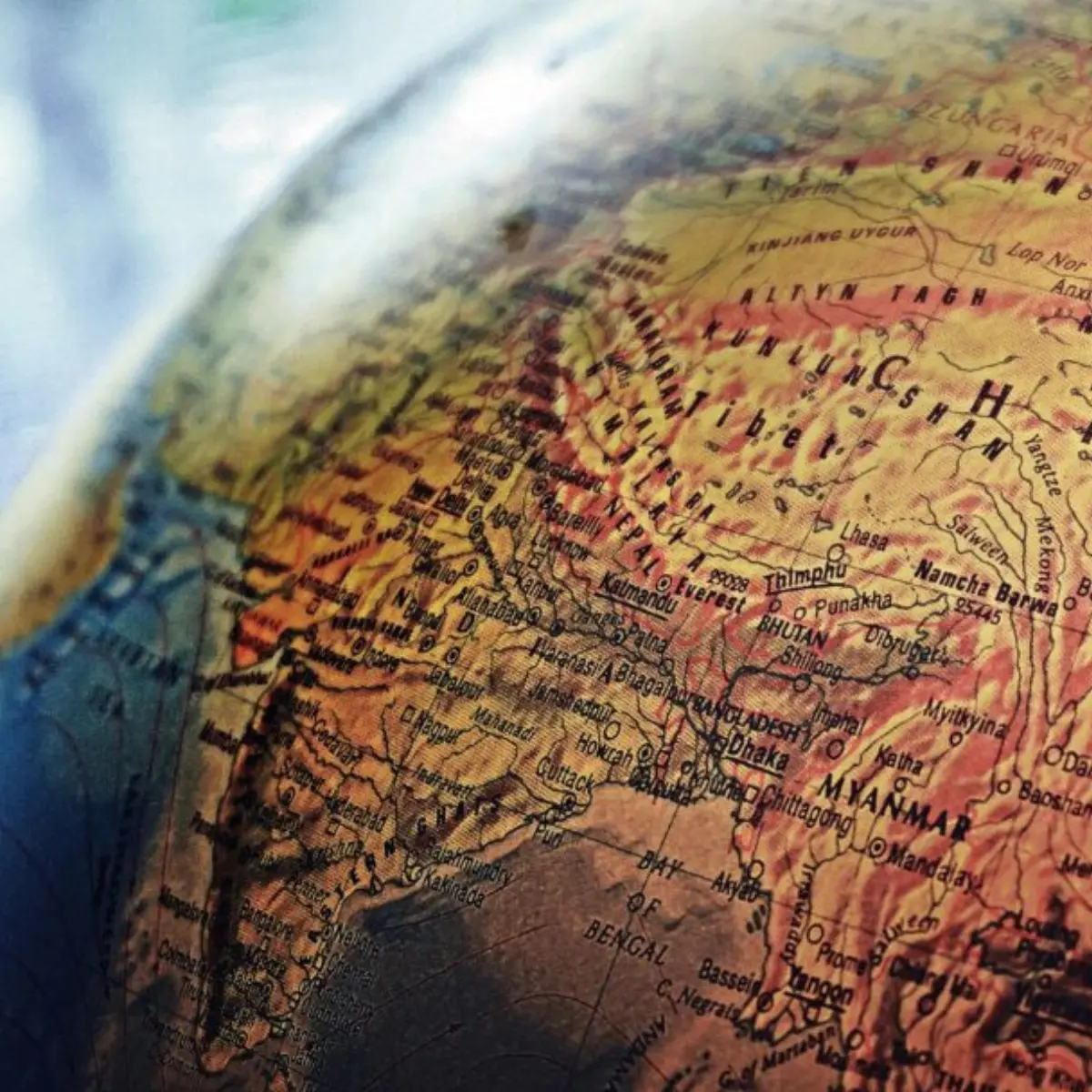
In an interconnected world, economy and geopolitics are no longer separate compartments - they are interlinked. Events in the Strait of Hormuz, the Red Sea, or off the coast of Venezuela ultimately impact energy bills, the supply chains of our factories, and the viability of our exports.
At the centre of this storm is Donald Trump, who is moving the pieces on the international board with a strategy that is as bold as it is risky: global tariffs, military muscle, and unconditional support for Israel.
Tariffs: Industry or Illusion?
In 2025, Trump reinstated a global 10% tariff along with a “reciprocal tariff” mechanism that allows him to adjust import duties on a country-by-country basis. The narrative is simple and effective: protect the American worker and revive domestic industry. In the short term, there are visible examples: steel and aluminium plants rehiring staff, and production picking up in some industrial states.
However, evidence from organisations such as the IMF and the OECD is clear: tariffs do not correct the US’s external imbalances and only generate limited sectoral benefits. Gains in steel are offset by losses in automotive or electronics, as imported inputs raise production costs. In short, the effect is more political than economic.
However, Trump is not only seeking “reindustrialisation”. His strategy has several layers: geopolitical - tariffs serve as a lever of pressure against China and, at the same time, against allies who do not concede on investment or technological standards; hidden taxation - they act as an indirect tax on consumption without needing Congressional approval; supply chain redesign - not to bring all production back, but to shift it to strategic partners such as Mexico or Vietnam, reducing dependence on China; and electoral - sending his base the message that “America is back in charge,” even if economists express reservations.
The European Union, for its part, has also imposed tariffs - particularly on Chinese electric vehicles - but its narrative is different. Brussels appeals to “fair competition” and the defence of the green transition. China’s retaliation, with tariffs of up to 62% on European pork, hits Spain directly, reminding us that the tariff war is not fought in the abstract, but affects specific, sensitive sectors.
Gaza, the Red Sea and the Cost of Importing from China
Adding to this tariff war is another, more literal war: that of Gaza. Its repercussions in the Red Sea have pushed up logistics costs between Asia and Europe. Attacks on vessels have forced rerouting from the Suez Canal to the Cape of Good Hope, adding up to two extra weeks of transit and higher insurance premiums.
The World Bank and UNCTAD have documented how these disruptions slowed global trade in 2024 and 2025. Europe, highly dependent on supply chains with Asia - and therefore with China - pays a geopolitical premium for every container. The combination of tariffs and logistical disruptions is explosive: it not only raises import costs, but also erodes the competitiveness of our exports, which rely on those inputs.
By unwaveringly supporting Israel, Trump positions himself as a guarantor of regional security, but indirectly contributes to maintaining tension that raises global trade costs. For Washington, the message is clear: Middle East security is also measured in the cost of goods passing through Suez.
Venezuela, Guyana and the Oil to Come
The third front is in the Caribbean. Off the coast of Venezuela, the US has deployed warships, partly for anti-drug operations and partly as a warning in the territorial dispute between Venezuela and Guyana. The key issue is oil: Guyana’s Stabroek block is already producing nearly one million barrels per day and could reach 1.7 million by 2030, representing unprecedented growth in the hemisphere.
Trump knows that protecting Guyana and keeping Caracas in check not only secures new crude sources for the international market, but also projects power in his “backyard”. It is a message to Beijing, which has invested in Venezuelan energy, and to Moscow, Maduro’s ally. In practice, it is another dimension of the same policy: reciprocity and coercion. Where tariffs do not reach, the fleet does.
It’s All Geopolitics
The common thread is clear: tariffs, maritime routes, and military presence are all part of the same power strategy. Trump uses economic, logistical, and military tools to upend the global board and demonstrate that the US has the ability to impose costs - on allies and rivals alike - when they do not comply with its demands.
For Europe, and especially for Spain, the challenge is enormous. Our automotive industry depends on global inputs, our pork sector has been caught up in China’s retaliation, and our ports (Valencia, Algeciras) are affected by logistical rerouting from the Red Sea. Understanding that every detained ship, every imposed tariff, and every military deployment is part of the same script is crucial for designing trade and diplomatic policies that are up to the task.
In conclusion, Trump is not only playing with tariffs: he treats geopolitics as an integrated whole, from the White House to the Strait of Hormuz, from Brussels to Georgetown. In this game, the boundaries between economy and security blur. If 2025 teaches us anything, it is that trade policy is no longer simply a matter of balance of payments - it is an instrument of global power.
Article published in El Confidencial